A Two-Word Blessing: How Receptivity and Seeing Beauty Heal the Body
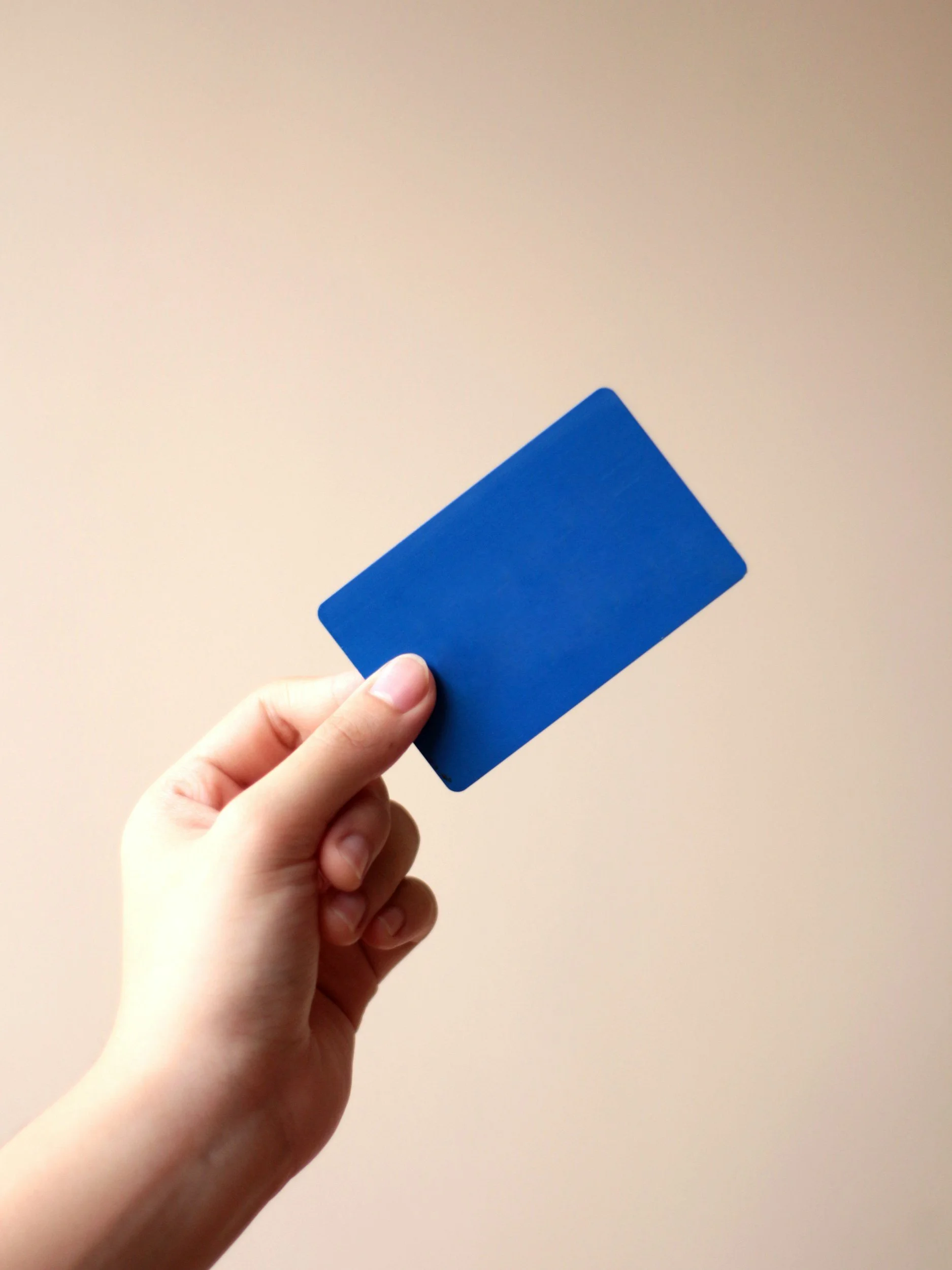
A little card with a two-word blessing on the back taught me about receptivity and healing.
Photo by Thalia Karr at Unsplash.
Unpredictable outcomes can be magical learning experiences. William James once wrote about chance as an exercise of free will—a way to break open our rigid habits and let something unexpected in. One of his students even captured it in a simple phrase: “Chance is your chance!” In that spirit, I love invoking that sense of randomness in daily life, so at the start of a recent healing workshop, I decided to put chance into action right away. “I wonder what is going to happen?” I thought.
As the group settled in, I passed around a small box filled with slips of cardstock. On each card was a simple two-word phrase corresponding to a way of being, a gentle action, or a subtle state of consciousness. The exercise was meant to spark conversation and help us set intentions for our time together, but it became something a little deeper: the exercise gave us a glimpse into our own state of receptivity in that moment.
As people drew their little cards, the room lit up with a range of reactions I could see and hear: the expressions on people’s faces along with the little grunts and “hmmm” sounds told a variety of stories. Some participants looked confused, others disappointed, and a few visibly delighted. How do we receive a simple set of words in the present moment? Do we welcome them as a blessing, or do we feel flustered by the vastness of possible meanings? Do we approach life with wonder, or do we immediately worry about getting things “correct” and “on time”?
Then came the most surprising response of all: a sudden burst of laughter from across the room.
We tend to laugh when something takes us by surprise, when we are struck by an absurdity, or when a hidden, unspoken truth is suddenly laid bare and out in the open. I couldn't help but wonder what her card said to evoke such a visceral and honest reaction. The phrase on the little card in her hands was simple: “Seeing beauty.”
Why did she laugh?
Her reaction stayed with me long after the workshop ended, leading me to reflect on the connection between seeing beauty and experiencing health and well-being. The ability to see beauty is connected to the mind’s availability to take life in, because seeing beauty comes from a state of active appreciation, a willingness to be present enough to take in the spontaneous gifts around us. Just this morning outdoors in the Qigong circle, I saw clouds drift in the sky, I heard the song of birds, and I caught the warmth in the eyes of people in class as we did the snake walk while we hummed the theme of the Pink Panther. So much beauty and lightness! True receptivity is a somatic state of openness. When the mind is tightly closed, guarded, afraid or rushing to judge, the body expresses that defensiveness when it tenses up as if “suiting up” in a kind of protective armor against an invisible threat. We brace ourselves against life. To see beauty is to be open to the full, vibrant expression of living.
Yet, there is a shadow side of seeing beauty. When we reduce “beauty” to surface appearances, we risk overvaluing the superficial over the deep. Perhaps her laugh was a recognition of that tension, or simply the surprise of being asked to slow down and look. Ultimately, seeing beauty isn’t about vanity or perfection. The willingness to see beauty is a willingness to trust what you are drawn to. This is about trusting what you feel. Choosing to be receptive can be a rigorous discipline of knowing yourself, trusting life and being willing to learn new things.
Seeing Beauty is Cultivating Receptivity
To cultivate receptivity—to truly “see beauty”—requires us to soften the protective armor momentarily and connect with what is in front us. When the mind relaxes its need to control and be right about everything, the nervous system gets the signal that it is safe to settle, safe to come out, eat, play (experiment and learn), be with others and just live. When the mind habitually braces against the unexpected, the body follows suit, holding the breath and automatically remembering past dangers. Anticipating threat can become a way of life. This reminds me of the time I worked a job in Silicon Valley, was laid off and felt lost. I got a new job right away, but it was the wrong job. I rode my bike every day to and from work, but the wrongness of it all permeated everything. One day I got hit by a car on my bike and broke my arm. That’s when it seemed all the happiness in my life had evaporated. Depressed, sleepless, freaked out, I remember I could not take in beauty at all at the time! A painting I’d bought from a local artist (a painting I still have), which had always given me joy before because it featured my favorite color, was on my bedroom wall, but I felt nothing when I would “see” it every morning. I remember I could not “take in” my favorite color, and I could not enjoy my favorite things at the time. It was a hard time. But then I remember getting a few sessions of bodywork: after one particular session, I felt an undeniable shift. That’s when I felt myself newly receptive when I noticed light and colors, as if for the first time, in my therapist’s office. My bodywork therapist had a beautiful dreamcatcher in her office, and I never noticed it until that day. It was then that my favorite color, the celeste sky blue in the painting, once again became something I could take in with my very heart and soul. I could see beauty! My frozen heart and clenched and tense body had finally let go.
Receptivity is the antidote to the chronic bracing of the body, and it takes practice and commitment to honestly “catch” the body tightening up. Recognizing tension is the first step in letting it go. In those honest moments of noticing tension, that’s when you choose to do something different. Get a massage, do some bodywork. Talk to friends. Do mindbody practice. Repetition is what makes a new way of being (which includes a habit of seeing beauty) truly possible.
Truly seeing and appreciating beauty means the physical body is in a state where it no longer needs to clench against the unexpected or the unknown. In that softened space, even if it is just for a few moments, we become available to the spontaneous gifts around us: our favorite color, the sound of birdsong, a sudden melody from an ice cream truck passing by, or a moment of unexpected connection with ourselves or with others. It is the ordinary stuff of daily living that plays out as the story of our lives. Seeing beauty isn’t just an intellectual exercise or a superficial appreciation of pretty things; it is a vital, living practice of allowing ourselves to make space within the body and mind, become receptive and even enjoy life.
Especially in challenging times, choosing to see beauty, looking for beauty in everything, can be a daily gratitude practice that reminds you to release tension and become available to life, so that you breathe easier and invite others to do the same.